
See Gem As
Tools
Research
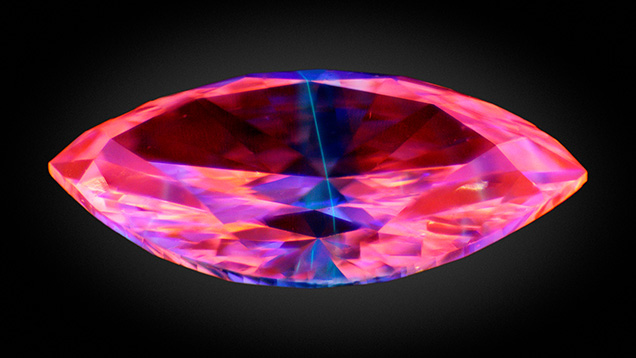
Multilayered Laboratory-Grown Diamond
A laboratory-grown diamond with multiple growth layers highlights the challenges of discerning the details of diamond synthesis.
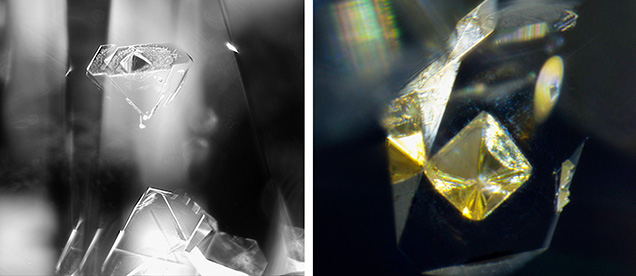
Diamond Within a Diamond Within a Diamond
A natural diamond contains two inclusions resembling a faceted diamond and a rough diamond.
An Era of Sweeping Change in Diamond and Colored Stone Production Markets
The diamond, colored stone, and pearl businesses have witnessed unprecedented change since the turn of the 21st century.
Synthetic Moissanite: A New Diamond Substitute
Synthetic moissanite is much closer to diamond in overall appearance and heft than any previous diamond imitation; this article reports on how to identify and characterize it.
Cutting Diffraction Gratings to Improve Dispersion (“Fire”) in Diamonds
A new microlithography process developed to create high-resolution diffraction grating patterns on portions of certain facets can improve the dispersion of light and thus the amount of “fire” in a diamond.
Winter 2011 G&G Lab Notes
This section, from the Winter 2011 issue of Gems & Gemology, is a compilation of interesting finds from GIA’s laboratories.
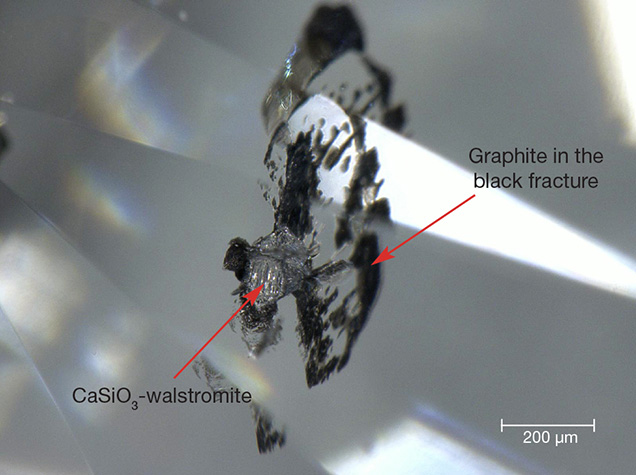
D-Color Natural IIa Diamond with Walstromite Inclusion
A diamond is proven to have a superdeep origin through an inclusion of CaSiO3-walstromite.
Identifying Gem-Quality Synthetic Diamonds: An Update
Synthesized gem-quality diamonds from the General Electric Company are analyzed for characteristics that distinguish them from natural stones.
Observations on GE-Processed Diamonds: A Photographic Record
Observations made at GIA on 858 GE-processed diamonds revealed several interesting features that may be diagnostic of this kind of diamond. Specifically, a significant percentage exhibited a slightly hazy appearance, noticeable internal graining, and other unusual internal features.
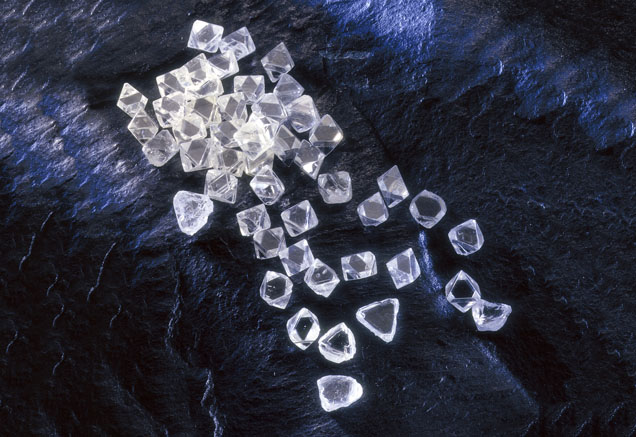
Diamond History and Lore
Diamond Care and Cleaning Guide
Learn about diamond's durability and how to care for your diamond jewelry.
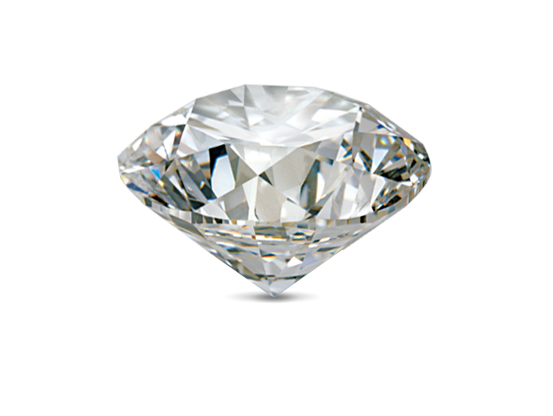
Diamond Description
Diamond is the only gem made of a single element: It is typically about 99.95 percent carbon. The other 0.05 percent can include one or more trace elements, which are atoms that aren’t part of the diamond’s essential chemistry. Some trace elements can influence its color or crystal shape.