
G&G in a Flash: Glowing Gems - What Does Fluorescence Tell Us?
Learn about the principles, mechanisms, and characteristics of luminescence that create the impressive and memorable glow of gemstones.
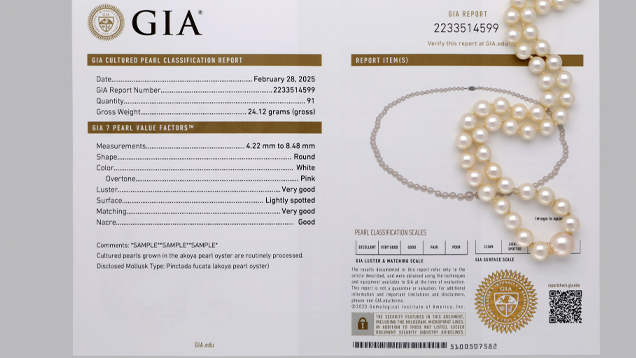
GIA Introduces Expanded Nacre Scale to All Pearl Classification Reports
GIA is introducing an expanded approach to evaluating nacre on all pearl classification reports
GIA Introduces Expanded Nacre Scale to All Pearl Classification Reports
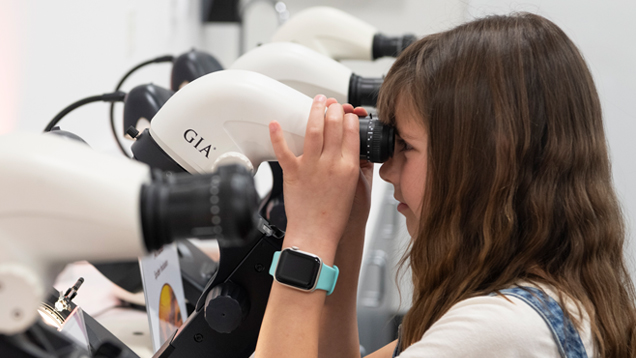
GIA GemKit 將寶石科學帶入不同課堂
Young students anywhere in the world can now experience the wonder of gems and minerals with GemKit™ by GemKids®, an online treasure trove of information and activities from GIA®, the Gemological Institute of America, the 90-year-old global leader in gem and jewelry education.
GIA GemKit Brings Gem Science to Any Classroom
Young students anywhere in the world can now experience the wonder of gems and minerals with GemKit™ by GemKids®, an online treasure trove of information and activities from GIA®, the Gemological Institute of America, the 90-year-old global leader in gem and jewelry education.

GIA 擴展杜拜和香港鑑定所的服務範圍
GIA will temporarily expand services offered by the GIA Laboratories DMCC and the GIA Hong Kong laboratory.
GIA Temporarily Expands Scope of Laboratory Services in Dubai and Hong Kong
GIA will temporarily expand services offered by the GIA Laboratories DMCC and the GIA Hong Kong laboratory.

Famed Neuroscientist to Open AGS X GIA Converge Conference
Neuroscientist and perception expert Dr. Beau Lotto will be the opening keynote speaker at Converge
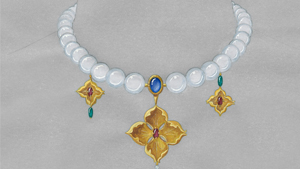
Gianmaria Buccellati Foundation and GIA Celebrate Emerging Jewelry Design Talent
GIA and the Gianmaria Buccellati Foundation recently recognized the exceptional talent of GIA jewelry design students worldwide with the eighth Gianmaria Buccellati Foundation Award for Excellence in Jewelry Design.
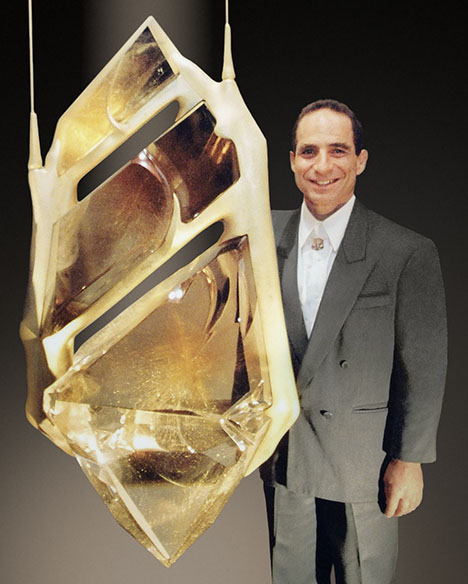
In Memoriam: Glenn Lehrer (1953–2024)
The gemological community mourns the loss of the legendary gemstone cutter and carver, Glenn Lehrer.
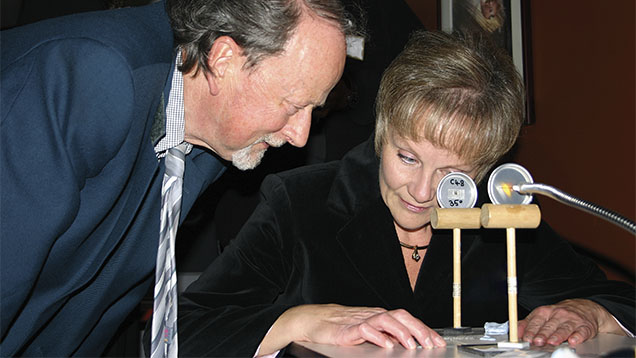
In Memoriam: Alan Hodgkinson (1937–2024)
The life of renowned Scottish gemologist Alan Hodgkinson is remembered.
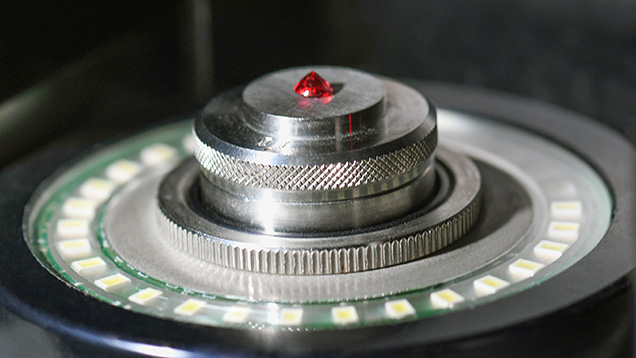
Analysis of Gemstones at GIA Laboratories
GIA’s laboratories use advanced instrumentation and research to deliver accurate grading, identification, and origin determination for natural and laboratory-grown diamonds, colored stones, and pearls.
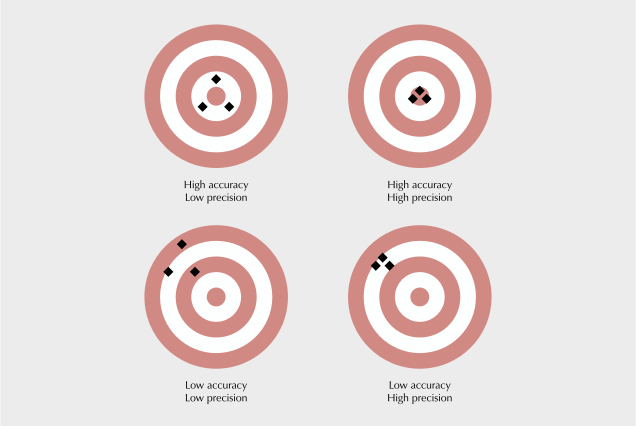
Metrology at GIA
GIA ensures accurate gemological measurements across its global laboratories through rigorous metrology practices, including systematic instrument calibration, validation from traceable standards, and continuous monitoring by trained staff to maintain precision and consistency.
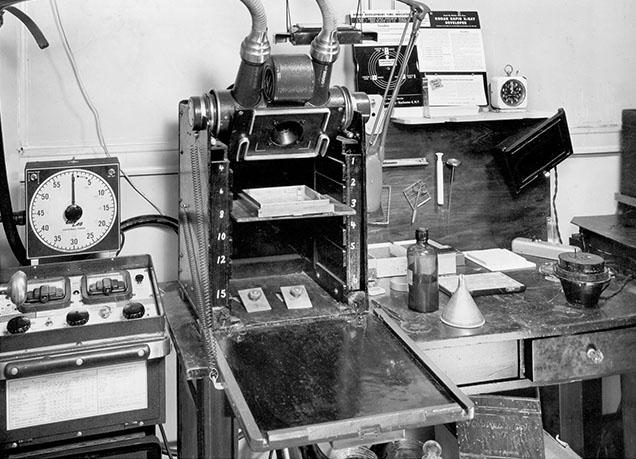
Applications of X-Ray Radiography and X-Ray Computed Microtomography in Gemology
X-ray imaging techniques revolutionized pearl testing by enabling gemologists to distinguish natural from cultured pearls through detailed visualization of their internal structures, evolving from film-based systems in the early 1900s to today’s sophisticated digital equipment.
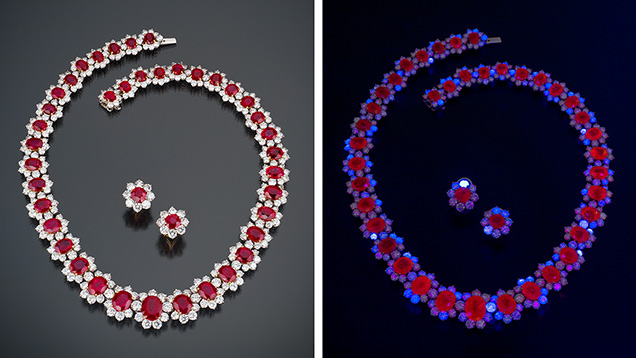
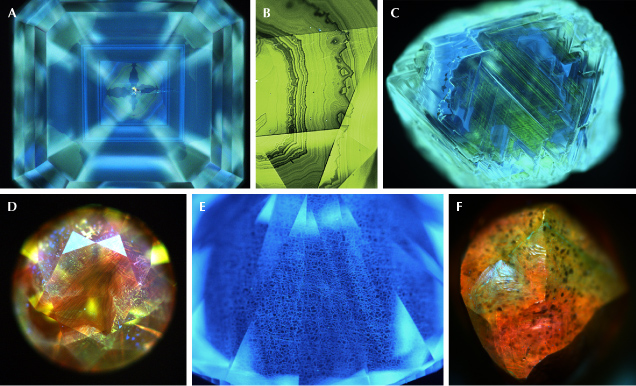
Glowing Gems: Fluorescence and Phosphorescence of Diamonds, Colored Stones, and Pearls
Photoluminescence imaging, which analyzes how gemstones glow under ultraviolet light, is an important analytical tool for detecting impurities, natural versus synthetic gems, and treatments through the observation of fluorescence and phosphorescence patterns.
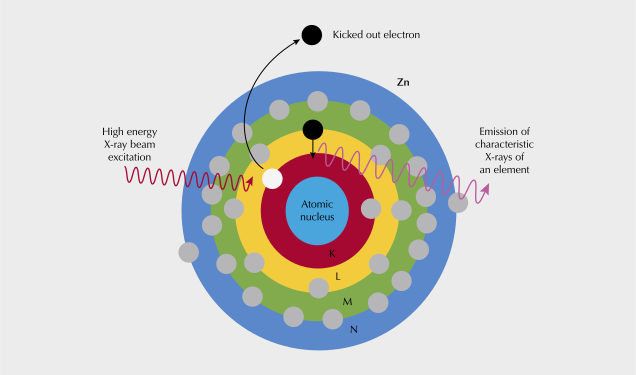
Chemical Analysis in the Gemological Laboratory: XRF and LA-ICP-MS
The primary chemical analysis methods applied in gemology are XRF, which uses X-ray emissions for nondestructive testing, and LA-ICP-MS, which provides detailed analysis and greater sensitivity. LA-ICP-MS has become essential for origin determination and treatment detection.
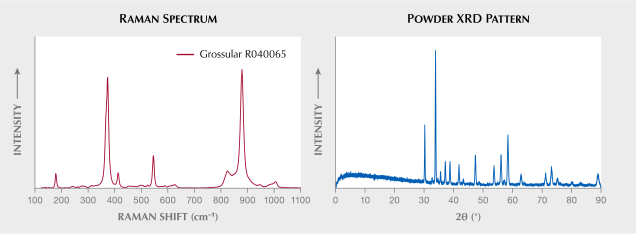
Raman Spectroscopy and X-Ray Diffraction: Phase Identification of Gem Minerals and Other Species
Raman spectroscopy and XRD techniques are used to identify gemstone species through their atomic-scale structures, with Raman spectroscopy analyzing inelastic light scattering from crystal lattice vibrations and XRD examining X-ray interference patterns from atomic layers.
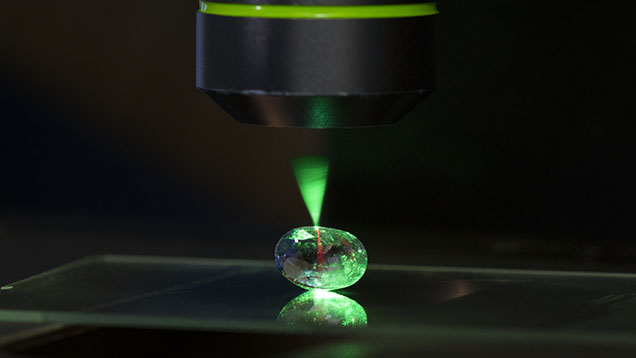
Shining a Light on Gemstone Properties: An Exploration of Photoluminescence Spectroscopy
Photoluminescence spectroscopy examines how gemstones absorb and emit light, uncovering crucial details about their identity and color origin through the detection of microscopic defects and impurities.
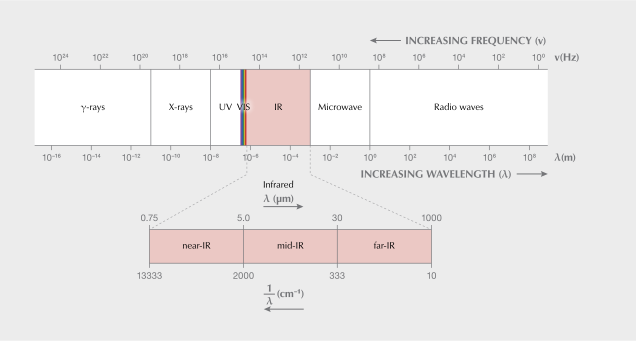
Infrared Spectroscopy and Its Use in Gemology
Infrared spectroscopy, specifically FTIR analysis, measures atomic vibrations to determine identity, cause of color, and potential treatments by analyzing how a gemstone absorbs infrared light.
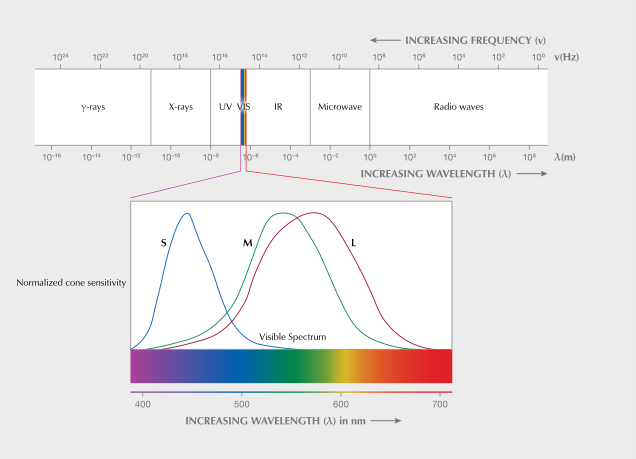
Application of UV-Vis-NIR Spectroscopy to Gemology
UV-Vis-NIR spectroscopy measures how gemstones absorb and interact with light across the ultraviolet, visible, and near-infrared ranges, revealing crucial information about their composition, origin, and potential treatments.
.jpg "YMAL GIA Ed")